Industrial Air Blowers
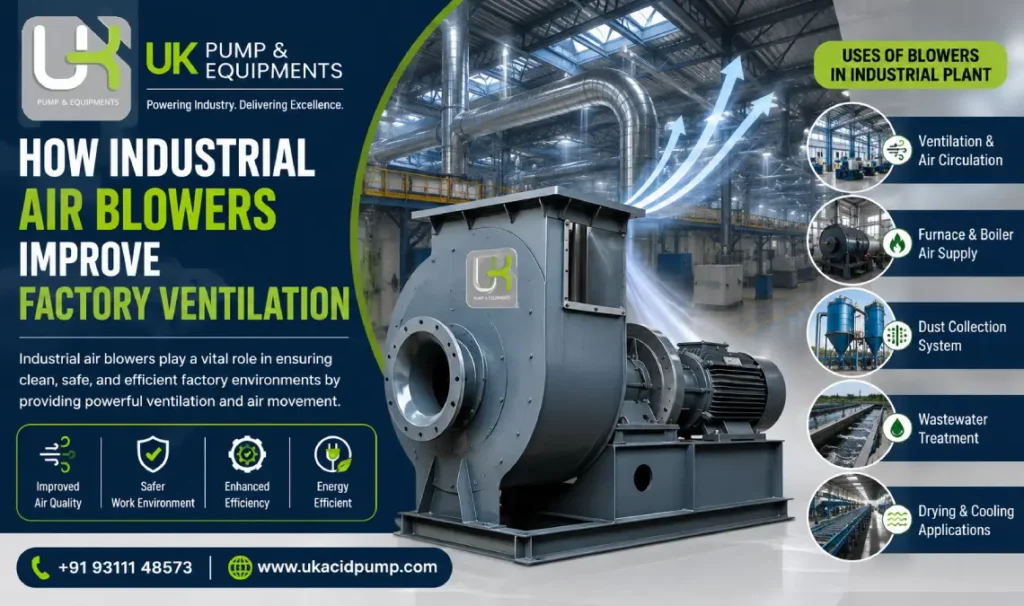
Proper factory ventilation keeps workers safe and productive. Many industries struggle with poor airflow. Stale air, heat, dust, and fumes create unhealthy conditions. Industrial Air Blower Manufacturers provide effective solutions for these challenges. UK PUMP & EQUIPMENTS delivers trusted centrifugal blowers across India. Our equipment transforms ventilation systems. This blog explains how industrial air blowers enhance factory environments.
Understanding Factory Ventilation Problems
Factories generate heat from machines. Welding fumes fill the air. Chemical vapors spread quickly. Dust particles float everywhere. These pollutants harm respiratory health. Workers feel tired and dizzy. Productivity drops significantly. Traditional fans cannot solve these issues. They only move air locally. Stagnant pockets remain untouched. Temperature rises in summer months. Humidity becomes unbearable. This is where Industrial Air Blowers make a real difference.
Common Air Quality Hazards
Manufacturing plants release volatile organic compounds. Paint shops produce solvent vapors. Foundries create metal dust. Textile mills have fiber particles. Food processing units generate steam and odors. Each hazard needs rapid removal. Poor ventilation traps these dangers inside. Workers breathe contaminated air daily. Long-term exposure causes chronic diseases. Therefore, factories must invest in robust airflow systems.
How Industrial Air Blowers Work
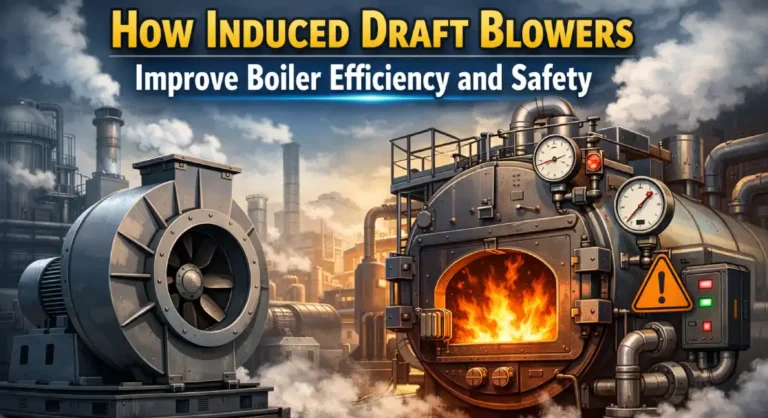
Industrial Air Blowers use rotating impellers. These impellers draw air inward. Then they accelerate it outward. The result is a strong, continuous airstream. This airstream pushes stale air out. Fresh air enters through intakes. The cycle repeats constantly. Unlike standard fans, blowers create pressure differentials. They move large air volumes efficiently. Industrial Centrifugal Blowers Manufacturer designs ensure high reliability. The centrifugal action generates steady flow rates. Even large spaces receive uniform ventilation.
Key Components of Air Blowers
A typical blower includes a housing. The impeller spins inside it. Bearings support the shaft. A motor drives the rotation. Inlet and outlet ducts direct airflow. Some models have filters. Others include silencers for noise control. Each component must withstand harsh conditions. Quality materials extend equipment life. UK PUMP & EQUIPMENTS uses robust construction methods.
Benefits of Improved Factory Ventilation
Clean air brings many advantages. First, worker health improves dramatically. Respiratory illnesses decrease. Absenteeism rates fall. Second, equipment lasts longer. Dust does not clog sensitive parts. Overheating reduces significantly. Third, product quality increases. Contaminants cannot spoil materials. Fourth, fire risks drop substantially. Flammable vapors disperse quickly. Fifth, regulatory compliance becomes easier. Inspectors will approve your facility.
Temperature and Humidity Control
Factories often run hot machines. Summer temperatures soar past 40°C. High Pressure Centrifugal Blowers move air forcefully. They replace hot air with cooler outside air. Humidity levels stabilize as well. Condensation stops forming on surfaces. Molds cannot grow in dry conditions. Workers feel comfortable throughout shifts. Production rates remain consistent.
Dust and Fume Extraction
Welding stations release toxic smoke. Grinding operations produce fine dust. Chemical mixing creates hazardous fumes. Industrial Air Blowers capture these pollutants at source. Ductwork connects directly to workstations. Contaminated air travels to filtration units. Clean air returns to the factory. Alternatively, blowers vent everything outside. This method works for non-recirculating systems. Either way, worker exposure minimizes significantly.
Types of Industrial Air Blowers for Ventilation
Choosing the right blower matters greatly. Different factories have unique needs. Let us explore common varieties.
Centrifugal Blowers
These are the most popular choice. Industrial Centrifugal Blowers Manufacturer offers radial, forward curved, and backward curved designs. Radial blowers handle dirty air streams. Forward curved types operate at low pressures. Backward curved versions achieve high efficiency. Each design suits specific applications. For general ventilation, backward curved blowers work best. They consume less electricity. Noise levels remain moderate.
High Pressure Centrifugal Blowers
Some factories need extreme airflow pressure. High Pressure Centrifugal Blowers deliver exactly that. They generate pressures above 2000 Pa. Long duct runs become possible. Multiple workstations connect to one blower. These units excel in large warehouses. They also work for paint booths and spray rooms. The powerful airstream overcomes duct resistance easily. Installation requires professional planning.
Regenerative Blowers
Regenerative technology uses a unique impeller design. Air circulates multiple times inside the housing. Pressure builds up gradually. These blowers are oil-free and quiet. They suit clean room environments. Electronics manufacturing benefits greatly. Regenerative blowers also work for fume extraction. Their compact size saves floor space.
Selecting Reliable Industrial Air Blower Manufacturers
Not all suppliers provide equal quality. Poorly made blowers fail quickly. They waste energy and money. Therefore, choose Industrial Air Blower Manufacturers with proven experience. Look for ISO certifications. Check material specifications. Cast iron housings last longer than plastic. Stainless steel impellers resist corrosion. Bearings should be sealed for life. Motors need energy efficiency ratings above IE3.
Why Choose UK PUMP & EQUIPMENTS
We serve pan India with pride. Our centrifugal blowers undergo strict testing. Each unit meets global standards. We offer customized solutions for your factory. Our team assesses your ventilation needs. Then we recommend the perfect blower size. Installation support is always available. After-sales service keeps your system running. Many industries trust our products. They see immediate ventilation improvements.
Installation Best Practices
Proper installation maximizes blower performance. Follow these guidelines for best results.
Positioning the Blower
Place the blower near fresh air sources. Roof-mounted units work well for exhaust. Floor-mounted blowers supply air directly. Keep the intake away from pollutant sources. Ensure sufficient clearance for maintenance. Vibration isolators reduce noise transmission.
Ductwork Design
Use smooth interior ducts. Avoid sharp bends and kinks. Each turn reduces airflow efficiency. Gradual elbows are better. Seal all joints properly. Leaks waste energy. Insulate ducts in extreme temperatures. Condensation will not form then.
Safety Considerations
Install guards on moving parts. Emergency stops must be accessible. Electrical connections need proper grounding. Overload protection prevents motor burnout. Regular inspections identify early wear. Train workers on basic troubleshooting.
Energy Efficiency and Cost Savings
Industrial Air Blowers consume electricity. However, modern designs are very efficient. Variable frequency drives adjust motor speed. This matches airflow to actual demand. Energy savings reach 40%. Also, improved ventilation reduces cooling costs. Air conditioners work less hard. Fresh air circulation alone lowers temperatures. Payback periods are often under two years.
Reducing Maintenance Expenses
Quality blowers require minimal upkeep. Check belts and bearings every month. Clean impellers from dust buildup. Lubricate moving parts as specified. Replace worn filters promptly. Following these steps extends equipment life. Downtime decreases significantly. Production continues without interruptions.
Case Examples of Ventilation Improvements
Consider a plastic molding factory. Fumes from hot resins caused headaches. Workers complained constantly. We installed High Pressure Centrifugal Blowers with hoods. Each machine got dedicated extraction. Air quality improved within days. Headaches stopped completely. Productivity rose by 15%.
Another example involves a metal polishing unit. Fine aluminum dust filled the air. Fire risks were extremely high. Our Industrial Centrifugal Blowers Manufacturer solution created negative pressure. Dust went straight to bag filters. The factory passed all safety audits. Insurance premiums even decreased.
A textile mill suffered from heat stress. Indoor temperatures reached 45°C. Workers fainted regularly. We supplied large-volume centrifugal blowers. They exchanged air every two minutes. Temperature dropped to 32°C. Absenteeism fell by half. Management reported huge morale gains.
Transitioning to Better Ventilation
Upgrading existing systems seems daunting. However, the process is straightforward. Start with an air quality assessment. Measure particulate levels and gas concentrations. Identify problem zones. Then calculate required airflow rates. Match these to blower specifications. Work with trusted Industrial Air Blower Manufacturers like us. We guide you every step. Implementation takes days, not months.
Overcoming Common Objections
Some managers worry about upfront costs. Consider long-term savings instead. Health claims reduce significantly. Equipment lasts longer with clean air. Energy bills stay lower. Other concerns include noise levels. Modern blowers operate quietly. Silencers and acoustic enclosures solve this. Space constraints also appear problematic. Compact designs fit anywhere. Rooftop mounting frees floor area.
Future Trends in Factory Ventilation
Smart blowers are emerging rapidly. Sensors monitor air quality continuously. Controls adjust blower speed automatically. Internet connectivity enables remote monitoring. Predictive maintenance alerts prevent failures. Energy optimization algorithms save power. Industrial Air Blowers will become smarter each year. UK PUMP & EQUIPMENTS stays ahead of these trends. We offer IoT-ready models today.
Sustainability Considerations
Green manufacturing demands efficiency. Our blowers use low-carbon materials. Motors meet IE4 efficiency standards. Recyclable components reduce waste. Proper ventilation also lowers greenhouse gases. Diluted fumes do not escape untreated. Carbon footprints shrink accordingly.
Conclusion
Factories cannot thrive with poor ventilation. Stale air damages health and productivity. Industrial Air Blowers provide the perfect solution. They remove contaminants rapidly. They control temperature and humidity. They protect workers and equipment. Choosing the right blower matters greatly. Trusted Industrial Air Blower Manufacturers like UK PUMP & EQUIPMENTS deliver reliable products. Our centrifugal and high pressure blowers serve pan India. Contact us today to improve your factory ventilation. Breathe easier, work safer, and produce more.
Frequently Asked Questions
Yes, they capture and exhaust fumes directly from welding stations.
Yes, they push air through long ducts across big spaces.
Check belts and bearings monthly. Clean impellers every three months.
Yes, our IE3 motors reduce power use by up to 40%.
Yes, we offer sanitary models suitable for food industry ventilation.
We provide 12 months warranty against manufacturing defects.