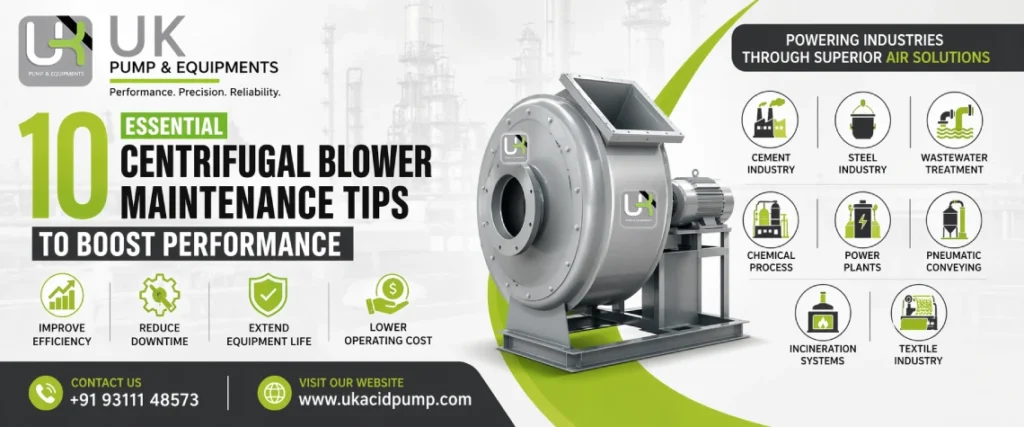
Proper Centrifugal Blower Maintenance Tips help you avoid sudden breakdowns. They also improve energy efficiency. UK PUMP & EQUIPMENTS supplies top-quality blowers nationwide. Yet even the best machines need regular care. This guide shares ten practical tips. Follow them to boost performance and lifespan.
Why Regular Maintenance Matters
Industrial blowers face harsh conditions daily. Dust, heat, and vibration take a toll. Neglect leads to costly repairs. High Pressure Centrifugal Blowers work harder than standard units. They demand stricter checks. Simple routines prevent major failures. You save money and time.
Maintenance also ensures safety. A failing blower can overheat or spark. That risks your workforce. Consistent upkeep reduces hazards. Centrifugal Blower Manufacturers design units for long service. But care is your responsibility.
Tip 1: Inspect Bearings and Lubrication
Bearings support the rotating shaft. They reduce friction. Check them every month. Listen for grinding noises. Feel for excess heat. Both signs mean trouble.
Use the right lubricant. Follow the manual’s schedule. Over-greasing harms as much as under-greasing. Apply small amounts. Clean the fitting point first. Dirty grease causes wear.
Industrial Blowers Manufacturers recommend high-temperature grease. It withstands friction heat. Replace worn bearings quickly. A seized bearing destroys the shaft. That costs thousands.
Tip 2: Clean Impellers Regularly
Impellers move air through the blower. Dirt builds up on blades. This unbalances the wheel. Vibration increases fast. Performance drops sharply.
Open the housing every three months. Remove dust with a soft brush. Avoid metal scrapers. They scratch the surface. For sticky residue, use a mild solvent. Dry thoroughly before reassembly.
Unbalanced impellers strain the motor. They also reduce airflow. High Pressure Centrifugal Blowers need clean impellers most. Their high speed amplifies any imbalance. Schedule cleaning during planned outages.
Tip 3: Check Belt Tension and Alignment
Many blowers use belt drives. Loose belts slip and wear fast. Tight belts overload bearings. Check tension with a gauge. The belt should depress slightly under thumb pressure.
Alignment matters equally. Misaligned pulleys cause vibration. They also shorten belt life. Use a straightedge across both pulleys. Adjust the motor base until perfect.
Replace belts in sets. Never mix old and new. Store spare belts in cool, dark places. Heat and light crack rubber. Centrifugal Blower Manufacturers specify belt types. Follow their recommendations exactly.
Tip 4: Monitor Vibration Levels
Excess vibration signals problems. It could mean imbalance, looseness, or bearing failure. Install vibration sensors. Or use a portable meter monthly.
Record baseline readings when new. Compare future values. A 30% increase needs investigation. Check foundation bolts first. Tighten any loose ones. Then inspect rotating parts.
Industrial Blowers Manufacturers provide vibration limits. Stay below those numbers. Ignoring vibration leads to catastrophic failure. The housing can crack. The shaft can break. Act early to avoid danger.
Different blade designs suit different duties. You need to know these types well.
Tip 5: Clean or Replace Air Filters
Filters protect the blower from debris. Clogged filters starve the inlet. The blower works harder. Energy bills rise. Airflow drops.
Inspect filters weekly in dusty environments. Clean reusable ones with compressed air. Blow from the clean side outward. Replace disposable types every three months.
Mark the filter change date on a log. Use high-efficiency filters where needed. High Pressure Centrifugal Blowers need steady airflow. A blocked filter reduces pressure output. Your process may suffer delays.
Tip 6: Verify Electrical Connections
Loose wires cause voltage drops. They also generate heat. Check all terminal boxes every six months. Tighten screws to spec. Look for discolored insulation. That indicates overheating.
Test motor windings for resistance. Use a multimeter. Values should match the nameplate. Large deviations mean winding damage. Call a certified electrician.
Centrifugal Blower Manufacturers include wiring diagrams. Keep them near the unit. Train staff on lockout procedures. Never work on live connections. Safety comes first.
Tip 7: Inspect Seals and Gaskets
Air leaks reduce blower efficiency. They also allow dirt ingress. Check shaft seals for wear. Look for oil stains or dust tracks. Replace worn seals promptly.
Gaskets between housing sections also fail. Listen for whistling sounds. Feel for escaping air. Use a soap solution to find leaks. Bubbles identify the spot.
Keep spare seals in stock. Industrial Blowers Manufacturers offer seal kits. Order genuine parts. Cheap copies leak sooner. A small leak today becomes a big repair tomorrow.
Tip 8: Balance the Rotor Periodically
Dynamic balance is critical for smooth operation. Even new rotors can go out of balance. Field balancing services exist. Hire them every two years.
For minor imbalance, add weights to the rotor. A professional uses specialized equipment. Do not attempt this yourself. Wrong weights make things worse.
Balanced rotors reduce bearing loads. They also cut noise. High Pressure Centrifugal Blowers run at high RPM. Balance becomes even more vital. Schedule balancing during annual shutdowns.
Tip 9: Monitor Operating Temperature
Every blower has a temperature range. Stay within it. Use infrared thermometers on bearings and housing. Note readings in a log.
High temperatures mean friction or overwork. Check lubrication first. Then inspect for blockages. Clean cooling fins if present. Ensure adequate ventilation around the motor.
Centrifugal Blower Manufacturers specify maximum temperatures. Exceeding them voids warranties. Install temperature switches for automatic shutdown. That prevents meltdowns.
Tip 10: Keep Detailed Maintenance Logs
Logs track what you did and when. They reveal patterns. A bearing fails every 14 months. That tells you to replace earlier. Logs also help new staff.
Record every inspection date. Note vibration, temperature, and amperage readings. Save receipts for parts. Centrifugal Blower Manufacturers often request logs for warranty claims.
Use a digital spreadsheet or paper binder. Update it immediately after each task. Review logs quarterly. Spot trends before failures occur. Good records boost accountability.
How UK PUMP & EQUIPMENTS Supports Your Maintenance Efforts
We supply reliable blowers across India. Our machines come with clear manuals. But we go further. We offer guidance on Centrifugal Blower Maintenance Tips. Our team answers your questions. We also stock genuine spare parts.
As trusted Centrifugal Blower Manufacturers, we build for durability. Yet we know maintenance multiplies lifespan. That is why we share these tips. Your success is our reputation.
We also connect you with service providers. Need vibration analysis? Ask us. Require rotor balancing? We have partners. Our network spans pan India. From Gujarat to West Bengal, we support you.
Additional Best Practices for High Pressure Units
High Pressure Centrifugal Blowers face extra stress. Their components work harder. Check discharge valves weekly. Ensure they open fully. Partial closure creates backpressure. That overheats the blower.
Inspect the volute casing for cracks. High pressure expands metal over time. Dye penetrant tests find micro-cracks. Repair them with welding. Then re-anneal the area.
Install pressure gauges before and after filters. A rising differential means cleaning time. Do not ignore this sign. Industrial Blowers Manufacturers design pressure limits. Running above them damages seals and bearings.
Common Mistakes to Avoid
Skipping lubrication is the top error. Second is using wrong grease. Third is ignoring unusual sounds. Train your operators to report changes immediately.
Another mistake is delaying repairs. “It still runs” is not a safety net. Small issues grow fast. Replace worn parts at first sign.
Do not use incompatible cleaning solvents. Some damage impeller coatings. Read the manual first. Centrifugal Blower Manufacturers list approved chemicals.
Finally, avoid untrained maintenance staff. Blowers are precision machines. One wrong adjustment ruins performance. Invest in proper training.
How Often Should You Perform These Tips?
Create a schedule based on usage. Daily checks: listen, feel, look. Weekly: inspect filters and belts. Monthly: bearings, lubrication, vibration. Quarterly: electrical connections, seals. Yearly: rotor balancing, deep cleaning.
Adjust frequency for harsh environments. Cement plants need more attention. Clean rooms need less. High Pressure Centrifugal Blowers in continuous service require weekly deep checks.
Post your schedule near each blower. Assign responsible persons. Audit compliance every month. Consistency delivers results.
Signs Your Blower Needs Immediate Attention
Watch for these red flags. Drop in discharge pressure. Higher than normal current draw. Persistent vibration after tightening. Unusual smells like burning rubber. Oil leaks from bearings.
Act immediately upon any sign. Shut down safely. Investigate the root cause. Call Centrifugal Blower Manufacturers for technical support. We help diagnose problems over the phone.
Delaying response risks fire or explosion. Do not gamble with safety. A few hours of downtime beats weeks of repairs.
The Role of Spare Parts Management
Keep critical spares on hand. Belts, bearings, seals, and filters. Also keep one set of fuses and contactors. Store them in a clean, dry cabinet.
Label each spare with part numbers. Industrial Blowers Manufacturers provide lists. Order genuine parts only. Counterfeit bearings fail quickly. That costs more in the long run.
Review your spare inventory every six months. Discard old belts. They become brittle. Rotate stock to use oldest first. Good management prevents waiting days for parts.
Training Your Team for Better Maintenance
Untrained staff cause damage. Train every operator on basic checks. Show them how to use a vibration pen. Teach proper lubrication amounts. Run drills on emergency shutdown.
Create a one-page checklist. Laminate it and hang near each blower. Update the list when you learn new Centrifugal Blower Maintenance Tips. Reward teams that follow procedures.
Advanced training for technicians includes alignment and balancing. Send them to courses by Centrifugal Blower Manufacturers. Many offer online modules. Invest in knowledge. It pays back fast.
Conclusion
Regular care transforms blower performance. These ten Centrifugal Blower Maintenance Tips cover the essentials. Inspect bearings and impellers. Check belts and filters. Monitor vibration and temperature. Keep logs and train your team.
High Pressure Centrifugal Blowers need extra attention. Their demanding roles leave little margin for error. Work with trusted Industrial Blowers Manufacturers like UK PUMP & EQUIPMENTS. We supply quality units and maintenance support.
Start your maintenance program today. Schedule the next inspection now. Your blowers will reward you with years of reliable service. Boost performance. Reduce costs. Stay safe.