Centrifugal Blowers for Steel Plant
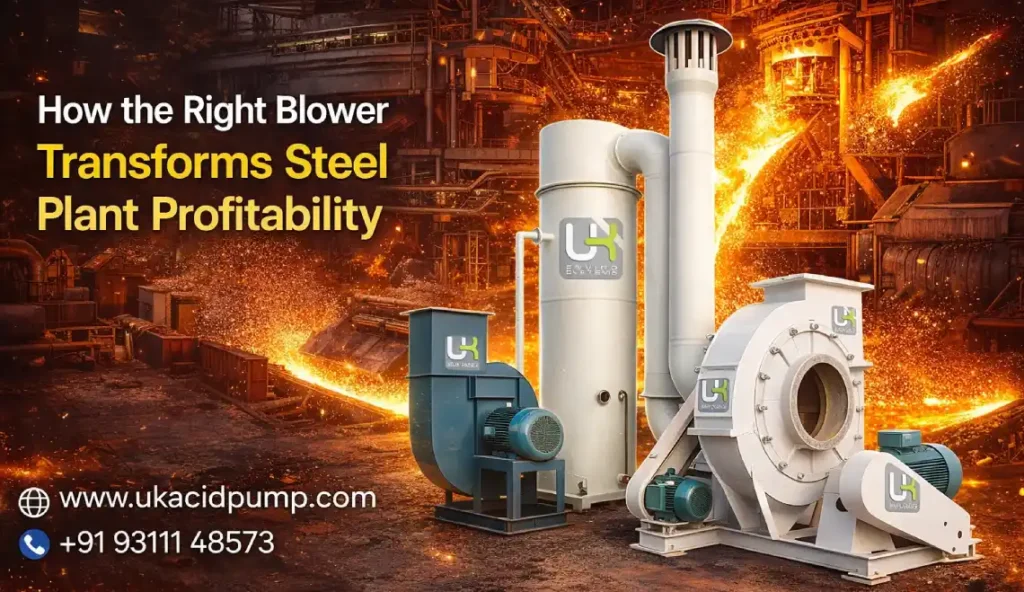
Steel manufacturing is a battle against heat, dust, and immense pressure. Every process demands precise airflow. Without reliable air movement, production stops. Profitability begins to erode. This is where Centrifugal Blowers for Steel Plant applications become indispensable. They deliver the consistent, high-volume air required for combustion, material handling, and pollution control. Choosing the right blower is not merely a technical decision. It is a strategic financial move. A poorly selected blower wastes energy and increases downtime. Conversely, a well-engineered solution directly boosts the bottom line. At UK PUMP & EQUIPMENTS, we understand these dynamics deeply. We supply high-performance blowers across India. Our focus is on delivering systems that enhance operational efficiency and profitability.
The Critical Role of Air in Steel Manufacturing
Steel production consumes vast amounts of air. This air powers blast furnaces, cools critical equipment, and transports materials. Moreover, it collects emissions before they leave the facility. Any interruption in airflow creates immediate losses.
Combustion and Heat Generation
Blast furnaces and basic oxygen furnaces rely on forced air. This air supports combustion at extreme temperatures. Without sufficient pressure and volume, the reaction slows. Consequently, production rates drop. Fuel consumption rises per ton of steel.
Material Handling and Pneumatic Conveying
Steel plants handle tons of coke, lime, and iron ore. Pneumatic conveying systems move these materials efficiently. They depend on consistent, high-pressure airflow. A reliable blower ensures smooth transfer without blockages.
Cooling and Process Stability
Critical equipment requires cooling air. Bearings, motors, and hydraulic systems generate intense heat. Proper cooling extends component life. It also prevents unplanned shutdowns. Therefore, a dependable blower contributes directly to machine reliability.
Profitability Leaks: How Poor Blower Choice Drains Revenue
Many steel plants operate with outdated or mismatched blowers. They treat air systems as secondary. This oversight creates hidden costs. Identifying these leaks is the first step toward transformation.
Energy Waste from Inefficient Designs
Blowers often run continuously. An inefficient unit wastes electricity at an alarming rate. In fact, a single oversized blower can add lakhs of rupees to annual energy bills. Conversely, a correctly sized, high-efficiency unit reduces this cost significantly.
Unplanned Downtime and Lost Production
Blower failure halts production. A malfunction in a furnace air supply stops the entire line. The cost of lost production far exceeds the blower’s price. Moreover, emergency repairs incur premium labor and parts costs.
Premature Component Wear
Incorrect blower selection causes excessive vibration. This vibration damages bearings, shafts, and seals. Frequent replacements increase maintenance budgets. It also consumes valuable engineering resources. These resources could otherwise focus on productivity improvements.
The Centrifugal Advantage for Steel Plant Operations
Centrifugal technology offers distinct benefits for demanding steel environments. Unlike positive displacement blowers, centrifugal units deliver smooth, continuous airflow. They handle large volumes efficiently. Furthermore, they operate with lower pulsation and noise.
Why Centrifugal Over Other Types
Centrifugal blowers maintain steady pressure across varying flow demands. This characteristic suits steel plants perfectly. Processes like combustion and dust collection need stable performance. Positive displacement blowers often struggle with fluctuating loads. Centrifugal designs adapt seamlessly.
Energy Efficiency Through Speed Control
Modern centrifugal blowers integrate with variable frequency drives. This allows precise airflow matching to process needs. Instead of wasting energy through damper control, the blower runs only as required. The result is substantial power savings. Many plants recover the investment within two years.
Backward Curved Centrifugal Blowers: Efficiency Personified
Among centrifugal designs, backward curved impellers stand out. They provide the highest efficiency for clean air applications. Their aerodynamic profile reduces internal losses. Consequently, they deliver more airflow per kilowatt consumed.
Design and Performance Advantages
Backward curved blades minimize turbulence. They also prevent dust buildup on the impeller. This self-cleaning property is vital in steel plants. Air often carries fine particulates. A backward curved design maintains efficiency even in mildly contaminated airstreams.
Lower Operating Costs
Because these blowers are highly efficient, they reduce electricity demand. Over a twenty-year lifespan, the savings are enormous. Additionally, they generate less heat, reducing cooling loads. Every efficiency gain translates to improved profitability.
High Pressure Centrifugal Blowers for Demanding Processes
Certain steel applications require elevated pressures. Combustion air for blast furnaces often demands pressures exceeding 500 mmWG. Pneumatic conveying of heavy materials also needs significant pressure. Standard blowers cannot meet these requirements reliably.
Applications Requiring High Pressure
High pressure centrifugal blowers serve critical zones. They supply air to tuyeres in blast furnaces. They power dense-phase pneumatic conveying systems. They also provide sealing air for electrostatic precipitators. Each of these applications demands consistent, high-pressure delivery.
Robust Construction for Reliability
These blowers feature reinforced casings and heavy-duty shafts. Bearings are designed for continuous operation. They often include cooling systems to manage heat. Such robust engineering minimizes downtime. It ensures that high-pressure requirements never compromise production.
Beyond Airflow: Environmental Compliance and Profitability
Steel plants face stringent environmental regulations. Airborne emissions must be captured before release. Failure to comply results in heavy penalties. It also damages reputation. The right blower system becomes a compliance tool.
Air Pollution Control Blowers: A Regulatory Imperative
Air Pollution Control Blowers form the backbone of dust collection systems. They pull fumes from sintering plants, electric arc furnaces, and cast houses. These blowers maintain negative pressure across baghouses and scrubbers. Without them, emissions escape uncontrolled.
Turning Compliance into Competitive Advantage
Investing in reliable pollution control blowers avoids fines. It also improves community relations. Furthermore, recovered dust can often be recycled back into production. This turns a waste stream into a raw material. Profitability improves through both cost avoidance and resource recovery.
Selecting the Right Partner: The Importance of Expert Manufacturers
Even the best blower design fails without proper manufacturing quality. Expertise in metallurgy, balancing, and assembly matters. A substandard blower introduces vibration and short life. Therefore, partnering with established Centrifugal Blower Manufacturers is essential.
What to Look for in a Manufacturer
Seek manufacturers with deep industrial experience. They should offer application engineering support. Customization for specific pressure, flow, and material requirements is crucial. Additionally, look for in-house testing facilities. Performance testing before dispatch guarantees reliability.
The Value of Local Presence and Support
A manufacturer with local service capabilities reduces downtime. Quick access to spare parts and technical assistance matters. Industrial Blowers in Ghaziabad benefit from a robust industrial ecosystem. Ghaziabad hosts skilled engineers and supply chains. This proximity ensures faster response times for pan-India clients.
Why Industrial Blowers in Ghaziabad Lead the Market
Ghaziabad has emerged as a manufacturing hub for heavy equipment. The region offers several advantages for blower production. Skilled labor, ancillary industries, and transport connectivity converge here. Consequently, Industrial Blowers in Ghaziabad often represent superior quality and value.
Engineering Expertise
Decades of industrial development have created a skilled workforce. Engineers in this region understand steel plant requirements intimately. They design blowers that withstand harsh conditions. This expertise translates into products with longer service life.
Quality Control Standards
Reputable manufacturers in Ghaziabad adhere to rigorous quality processes. They use precision balancing machines and advanced fabrication techniques. Each blower undergoes vibration analysis and performance testing. Such discipline ensures that every unit performs as specified.
Case in Point: Real-World Profitability Gains
Consider a mid-sized steel plant that replaced five aging blowers. Their old units consumed 450 kW continuously. They suffered frequent bearing failures. Production losses averaged eight hours per month. After consulting with expert Centrifugal Blower Manufacturers, they installed new backward curved centrifugal blowers with VFDs.
Measurable Results
Energy consumption dropped to 320 kW. Annual electricity savings exceeded ₹25 lakhs. Downtime reduced to negligible levels. Additionally, the new blowers improved dust collection efficiency. This allowed the plant to recycle more fine ore. Overall profitability increased by over ₹50 lakhs in the first year. The investment paid back in eleven months.
Lessons for Every Plant
This example illustrates a clear principle. The right blower is not an expense. It is an investment with quantifiable returns. Each plant can achieve similar gains. The key is to evaluate existing systems systematically.
A Holistic Approach: Matching Blower to Process
Profitability transformation requires more than swapping units. It demands a holistic assessment. Engineers must analyze ductwork, filtration systems, and control strategies. Matching the blower to the entire system unlocks full potential.
System Resistance and Efficiency
Often, plants overlook duct resistance. Poorly designed ductwork creates unnecessary pressure drop. This forces blowers to work harder. Correcting duct layouts can reduce power consumption further. Combining blower upgrades with duct optimization multiplies savings.
Variable Frequency Drives and Automation
Integrating blowers with plant automation yields additional benefits. Pressure and flow sensors adjust blower speed dynamically. This ensures that energy use precisely matches demand. Automation also enables predictive maintenance. Vibration and temperature monitoring alert operators before failures occur.
Looking Ahead: Future Trends in Steel Plant Blowers
The steel industry continues to evolve. Energy costs and environmental pressures will intensify. Blower technology must advance accordingly.
High-Efficiency Motor Integration
IE4 and IE5 motors are becoming standard. These motors reduce electrical losses. Coupled with high-efficiency blower designs, total system efficiency improves markedly. Plants adopting these technologies gain a competitive edge.
Digital Twins and Predictive Analytics
Advanced manufacturers now offer digital twins of blower systems. These models simulate performance under varying conditions. Operators can optimize settings virtually. Predictive analytics then forecast maintenance needs. This approach minimizes unplanned downtime.
Conclusion: A Strategic Investment, Not Just an Equipment Purchase
Steel plant profitability hinges on countless variables. Air systems often remain undervalued. Yet they influence energy costs, production uptime, and environmental compliance. Choosing the right Centrifugal Blowers for Steel Plant applications transforms these variables into advantages. Backward curved designs deliver efficiency. High pressure units meet demanding processes. Air pollution control blowers ensure regulatory peace of mind. Partnering with skilled Centrifugal Blower Manufacturers guarantees reliability. Industrial Blowers in Ghaziabad offer the engineering depth and service support that steel plants require. Ultimately, every blower selection should be viewed as a strategic investment. When done correctly, it generates measurable returns. It strengthens the bottom line. It also builds a foundation for sustainable, profitable steel production.
At UK PUMP & EQUIPMENTS, we are committed to delivering exactly that. Our blowers are engineered for steel plant environments. We combine advanced design with robust manufacturing. Let us help you transform your profitability—one blower at a time.