Backward Curved Centrifugal Blowers: A Complete Overview
In the world of industrial air movement, efficiency is king. The ability to move large volumes of air against significant resistance determines productivity. Among the various fan technologies available, one design stands out for its superior performance. The engineering behind these machines directly impacts energy consumption and operational stability. For industries seeking reliable solutions, understanding this technology is crucial. At Uk Pump & Equipments, we specialize in this precise engineering. Our focus on quality ensures that every unit delivers optimal performance. This article explores the mechanics, benefits, and applications of Backward Curved Centrifugal Blowers. We will explain why they are the preferred choice for demanding environments.
Understanding the Basic Principle
Centrifugal blowers operate on a simple principle. They accelerate air radially outward using a rotating impeller. The shape of the blades determines how this air moves. It also dictates the efficiency of the energy transfer from the motor to the airstream.
The Design of the Impeller
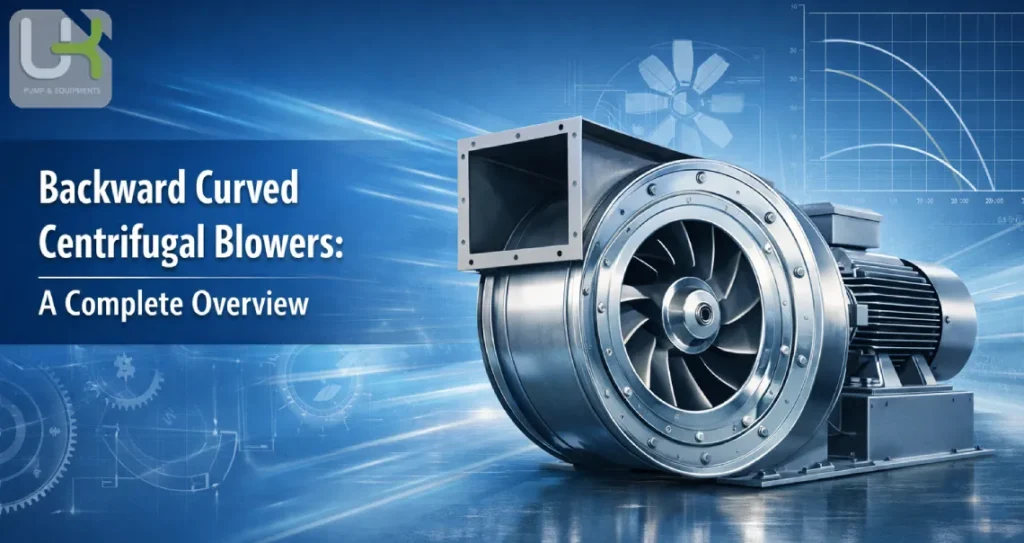
The defining feature of this blower is the blade orientation. Unlike forward-curved blades that scoop the air, these blades lean away from the direction of rotation. This design allows for a cleaner entry of air into the blade passages. It reduces turbulence and shock losses at the inlet. Consequently, the air moves more smoothly through the impeller.
How Airflow is Generated
As the impeller spins, it throws air outward by centrifugal force. The air then collects in a spiral housing called a volute. The volute converts the velocity pressure into static pressure. This static pressure is what pushes the air through ducts and against system resistance. The backward curved design excels at this conversion.
Key Advantages of This Design
Why choose this specific configuration over others? The benefits are substantial and measurable. They affect your bottom line and your maintenance schedule.
High Efficiency and Energy Savings
The primary advantage of Backward Curved Centrifugal Blowers is their efficiency. The blade shape minimizes impact losses. It allows the fan to operate at its peak performance across a wide range of pressures. This non-overloading characteristic means the motor draws less power at higher flow rates. You save energy compared to other designs. In fact, they are often the most efficient option in the centrifugal fan family.
Non-Overloading Power Curve
This is a critical safety feature. In some blower designs, power consumption rises continuously as airflow increases. This can overload and burn out the motor. The backward curved design has a different power curve. It peaks near the point of maximum efficiency. If system resistance drops and airflow increases, the power requirement actually decreases. This protects your motor from thermal overload. It provides peace of mind during variable operating conditions.
Lower Noise Levels
The smoother airflow through the impeller reduces turbulence. Less turbulence means less noise. These blowers generally operate more quietly than other types at similar duties. This contributes to a better working environment for your staff. It reduces the need for extensive soundproofing measures.
Engineering and Construction
The performance of any blower depends on its build quality. As leading Centrifugal Blower Manufacturers, we focus on robust construction. The materials and methods determine the lifespan of the equipment.
Impeller Materials
The impeller must withstand high rotational speeds and stresses. Common materials include high-strength steel or aluminum. For corrosive environments, stainless steel or special coatings are necessary. The blades are often welded or riveted to a heavy-duty backplate. This ensures the impeller maintains its shape and balance over years of service.
Balancing for Vibration-Free Operation
Dynamic balancing is essential. An unbalanced impeller causes vibration. Vibration damages bearings, seals, and ductwork. We precision-balance each impeller according to ISO standards. This ensures smooth, quiet operation at the intended speed. It extends the life of the entire blower assembly.
Types of Drive Configurations
The connection between the motor and the impeller affects performance and maintenance. You have two primary options. Each suits different operational needs.
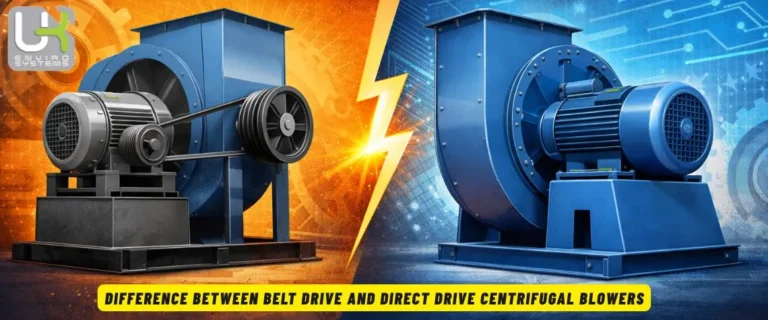
Direct Drive Centrifugal Blowers
In a direct drive arrangement, the impeller mounts directly on the motor shaft. This eliminates belts and pulleys. It offers several benefits. There are no energy losses from belt slip. Maintenance is reduced because there are no belts to replace. It also allows for precise speed control with a Variable Frequency Drive (VFD). This is ideal for applications requiring constant speed or clean environments.
Belt Drive Centrifugal Blowers
A belt drive uses pulleys and belts to connect the motor to the impeller. This offers flexibility. You can change the fan speed easily by changing the pulley sizes. This allows for field adjustments to meet exact airflow requirements. Belts also provide a cushion against shock loads. However, they require regular inspection and replacement. They are slightly less efficient due to belt friction. For High Pressure Centrifugal Blowers, belt drives allow for smaller motors to achieve higher speeds.
Performance Characteristics
Understanding the performance curve helps you select the right unit for your system.
Pressure vs. Flow Relationship
Backward curved blowers have a steep pressure curve. As static pressure increases, the flow rate decreases gradually. This provides stable operation in systems with variable resistance. They can handle fluctuations without surging or stalling. This makes them reliable for critical processes.
Handling Particulate-Laden Air
One consideration is their tolerance for dust. The blade shape can be prone to material buildup on the concave side. However, for air with light dust loads, they perform well. For heavy dust, airfoil blades or radial designs might be better. Proper selection depends on your specific air quality.
Applications Across Industries
These blowers are versatile. You will find them in numerous industrial settings.
HVAC and Ventilation Systems
Large commercial buildings use them in air handling units. They efficiently move air through extensive duct networks. Their quiet operation suits occupied spaces. They handle the variable static pressure of filters and dampers with ease.
Industrial Process Air
In manufacturing, they provide combustion air for burners. They supply air for drying systems and cooling processes. Their high-pressure capability makes them suitable for pneumatic conveying. They move light materials like sawdust or granules through pipes.
Pollution Control
They are integral to dust collection systems. They pull contaminated air through filters and scrubbers. The ability to handle varying pressure drops is key here. As filters load up, the resistance increases. The fan maintains airflow effectively. They also serve as Induced Draft Blowers in small boilers, pulling flue gases through the system.
Comparison with Other Blade Designs
How do they stack up against the competition? Knowing the difference aids in proper selection.
Forward Curved Blades
Forward curved fans move high volumes at low pressure. They are compact and inexpensive. However, they are less efficient. They also have an overload risk. If the duct opens up, the motor can draw too much current. Backward curved fans are superior for higher pressure and efficiency.
Radial Blades
Radial blade fans are rugged. They handle dirty air and sticky materials well. The blades are straight, making them easy to repair. However, they are generally less efficient than backward curved designs. They also tend to be noisier. For clean air applications needing high efficiency, the backward curved design wins.
The Importance of Proper Selection
Choosing the right blower requires careful analysis. You cannot guess based on pipe size alone.
Calculating System Resistance
You must know the total resistance your system presents. This includes duct friction, filter losses, and component pressure drops. Undersizing the fan leads to insufficient airflow. Oversizing wastes energy and causes control issues. Use accurate data to plot your system curve.
Consulting with Experts
Working with experienced Centrifugal Blower Manufacturers simplifies this process. We analyze your requirements. We consider temperature, altitude, and air composition. We then recommend the optimal wheel size, speed, and motor power. This ensures you get a blower that performs exactly as needed.
Maintenance Best Practices
Even the best equipment needs care. A maintenance schedule prevents unexpected downtime.
Bearing Lubrication
Bearings are the most critical mechanical component. They require regular greasing. Use the correct type and amount of lubricant. Over-greasing causes overheating. Under-greasing leads to wear. Follow the manufacturer’s intervals closely.
Vibration Monitoring
Keep a log of vibration levels. A sudden increase signals a problem. It could mean bearing wear, impeller imbalance, or looseness. Address vibration issues quickly. They escalate rapidly and cause secondary damage.
Belt Inspection
For Belt Drive Centrifugal Blowers, inspect belts monthly. Check for cracks, fraying, or glazing. Ensure proper tension. Loose belts slip and lose efficiency. Tight belts overload bearings. Replace belts in matched sets for even load distribution.
Innovations in Blower Technology
The industry continues to evolve. New developments enhance performance further.
Advanced Impeller Profiles
Computational Fluid Dynamics (CFD) now aids impeller design. Engineers can model airflow with extreme accuracy. This leads to blade shapes that minimize losses even further. The result is even higher efficiencies and lower noise.
Integration with Smart Controls
Modern blowers often integrate with plant control systems. Sensors monitor flow, pressure, and vibration. VFDs adjust speed automatically to meet demand. This creates a “smart” air movement system. It optimizes energy use in real-time.
Why Partner with Uk Pump & Equipments?
Choosing a supplier is as important as choosing the technology. You need a partner committed to quality.
Quality Assurance
We adhere to strict manufacturing standards. Every component is inspected. Every assembled unit is test-run before dispatch. We ensure it meets our performance criteria. This attention to detail gives you confidence.
Customization Capabilities
Standard products do not always fit unique applications. We offer customizations. Need a special coating? A non-standard inlet? A specific mounting arrangement? We work with you to deliver a solution that fits your exact space and process requirements. Our expertise in engineering ensures the customization maintains performance.
Conclusion
Backward Curved Centrifugal Blowers represent the pinnacle of air movement efficiency. Their intelligent design delivers high pressure with low energy consumption. The non-overloading power curve protects your motors. Their quiet operation improves the workplace. Whether you need a Direct Drive Centrifugal Blowers for precise control or a belt-driven unit for flexibility, this technology delivers. They serve critical roles in ventilation, process support, and pollution control. Proper selection, based on accurate system data, is essential. Regular maintenance ensures they provide decades of reliable service.
At Uk Pump & Equipments, we bring this technology to your facility. We combine high-quality manufacturing with expert support. Trust us to provide the airflow solutions that keep your operations running smoothly and efficiently.