Industrial Agitator with FRP Tanks
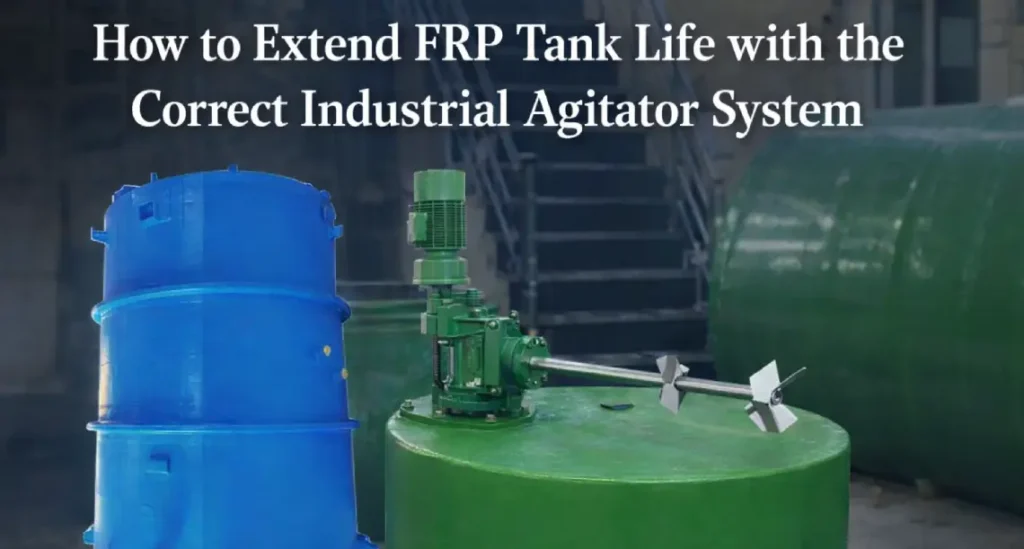
At UK Pump & Equipments, we understand your FRP tanks are a critical investment. Their longevity directly impacts your operational efficiency and bottom line. Many factors influence this lifespan, but one component is often underestimated: the Industrial Agitator with FRP Tanks. Selecting and integrating the correct agitation system is not just about mixing efficiency. It is fundamentally about protecting your asset. This guide explores how the right agitator system preserves your FRP tank, ensuring decades of reliable service.
The Critical Link Between Agitation and FRP Integrity
Fibreglass Reinforced Plastic (FRP) tanks offer exceptional corrosion resistance. However, their structural strength differs from steel or concrete. FRP is a composite material. Its performance relies on the bond between the resin matrix and the glass fibres. Incorrect mechanical stresses can compromise this integrity over time. An improperly specified agitator introduces these very stresses. The goal is achieving perfect process harmony. Your agitator must perform its duty without becoming a source of destructive force.
Understanding Destructive Dynamic Loads
An agitator imposes dynamic loads on a tank. These include direct mechanical forces and fluid-induced vibrations. For example, an oversized or unbalanced agitator creates excessive shaft deflection. This causes harmful vibrations throughout the tank structure. Consequently, these cyclic stresses can lead to micro-cracks in the resin. Furthermore, resonant frequencies can amplify these effects dramatically. The result is often premature fatigue failure at connection points. These include the nozzle, baffles, and tank shell.
The Perils of Fluid Dynamics and Cavitation
Beyond mechanical loads, fluid dynamics play a huge role. Incorrect impeller selection or speed can cause uneven fluid forces. This phenomenon is called hydraulic imbalance. It puts asymmetric pressure on the tank walls. Moreover, certain conditions can induce cavitation. Cavitation creates intense, localized shock waves. These waves can erode the protective inner liner of the FRP tank. Once the liner is compromised, the structural wall becomes exposed to chemical attack. Therefore, selecting the right agitator mitigates these fluidynamic risks.
Selecting the Correct Agitator System: A Design-First Approach
Extending tank life begins at the specification stage. You must view the tank and agitator as one integrated system. Collaboration with experienced Industrial Agitator Manufacturers is vital. They can conduct a thorough process review. This ensures the equipment matches both the application and the vessel.
Matching the Agitator to the Application
First, define the process objective clearly. Is it blending, suspension, gas dispersion, or heat transfer? Each goal requires different agitator characteristics. For instance, a propeller type agitator is excellent for low-viscosity blending. However, it may be unsuitable for suspending heavy solids. Using the wrong type forces the equipment to work harder. This increases load and wear on the tank. Provide manufacturers with exact fluid properties. Key details include viscosity, density, solids percentage, and corrosiveness. This data informs the optimal agitator design.
Sizing and Power: The Goldilocks Principle
Agitator sizing is crucial. An undersized agitator will not achieve the process result. Operators might then run it at higher speeds, causing wear. Conversely, an oversized agitator is a common and costly mistake. It imposes unnecessary structural loads from day one. It also consumes excess energy. The correct power input achieves the process goal with minimal mechanical stress. Reputable agitator mixer manufacturers use advanced software. They simulate fluid dynamics to determine the perfect size and power. This precision engineering protects your tank.
The Mounting Configuration: Nozzle vs. Top Mount
The method of attaching the agitator significantly affects tank stress. Nozzle-mounted units are common. The agitator mounts on a reinforced tank nozzle. The tank must withstand the full mechanical and hydraulic loads. Proper nozzle reinforcement is non-negotiable. Top-mounted agitators on a beam or cover distribute loads differently. Often, they are gentler on the tank structure. Your choice depends on tank design and process needs. Experts in FRP agitator mixer tanks manufacturer will advise on the best configuration. They ensure the tank’s design accommodates the chosen mount.
Achieving System Synergy: The Tank and Agitator as One
The physical integration of the system is where theory meets practice. Attention to detail during installation prevents long-term issues.
Importance of Precision Alignment
Proper shaft alignment is paramount. Misalignment creates damaging vibrations and increases bearing load. This stress transmits directly to the tank nozzle. Always align the agitator shaft according to the manufacturer’s strict specifications. Use laser alignment tools for accuracy. Check alignment periodically during maintenance. This simple practice greatly extends the life of both the agitator and the tank.
Reinforcement and Support Strategies
Tanks require local reinforcement at agitation points. This is especially true for side-entry or bottom-entry designs. The FRP agitator mixer tanks must have additional laminates at nozzle connections. This reinforcement handles the cantilevered loads. Additionally, consider external support structures for larger agitators. A properly designed support frame independently bears the agitator’s weight. This isolates the tank from static load stresses. It allows the tank to handle only the internal pressure and fluid forces.
Baffling: Stabilizing the Fluid Mass
Baffles are essential for effective mixing. They also play a key role in tank protection. Baffles prevent fluid swirl and vortex formation. This reduces radial forces on the tank wall. It also minimizes vibration and load on the agitator shaft. Correctly designed and installed baffles create stable, predictable fluid motion. This stability protects the tank’s structural integrity. Ensure baffles are securely bonded to the tank wall. They must withstand the fluid forces without acting as stress concentrators.
Proactive Maintenance: The Guardian of Longevity
Even a perfectly specified system needs care. A proactive maintenance regime is your final defence. It catches small issues before they become tank-threatening problems.
Vibration Monitoring and Analysis
Implement a routine vibration monitoring program. Use sensors on the agitator drive and tank structure. Baseline readings when the system is new and operating correctly. Regularly compare new data to this baseline. Increasing vibration levels often indicate misalignment, impeller damage, or bearing wear. Early detection allows for scheduled repair. This prevents catastrophic failure that could damage the tank.
Scheduled Inspection and Component Care
Follow the agitator manufacturer’s maintenance schedule rigorously. This includes lubrication, seal checks, and bolt torque verification. Inspect the tank interior regularly, especially near the agitator nozzle. Look for any signs of stress cracking, gel coat blistering, or wear. Also, check the impeller for erosion or corrosion damage. An imbalanced impeller is a major source of vibration. Partner with knowledgeable Propeller Type Agitator Manufacturers for genuine replacement parts. This ensures continued performance and compatibility.
The Role of Operational Training
Finally, train your operators thoroughly. They must understand the agitator’s operating limits. They should know the signs of potential problems. Encourage them to report unusual noises or vibrations immediately. Empowered operators become the first line of defence for your Industrial Agitator with FRP Tanks. They ensure the system runs as designed, preventing abusive practices.
Conclusion: A Partnership for Performance and Durability
Extending the life of your FRP tank is a strategic endeavour. The correct Industrial Agitator with FRP Tanks is not an accessory. It is a vital partner in preserving your asset. The path to longevity involves careful selection, precise integration, and diligent maintenance. Always engage with specialist industrial agitator manufacturers who understand FRP’s unique characteristics. Their expertise guides you toward a harmonious system. This synergy maximizes your process efficiency. More importantly, it safeguards your tank investment for the long term. Ultimately, the right agitator system pays for itself many times over. It delivers through reliable performance and decades of durable service from your FRP Storage Tanks or process vessel.