Belt Drive Centrifugal Blowers
In the demanding world of industrial ventilation and air movement, precision and reliability are non-negotiable. For system designers and plant managers seeking optimal performance, partnering with expert Belt Drive Centrifugal Blowers Manufacturer is a critical decision. These blowers represent a pinnacle of flexible, efficient design. They unlock maximum Cubic Feet per Minute (CFM) output for countless applications. This technology offers a distinct efficiency advantage over direct-drive alternatives. Understanding this advantage is key to superior system design and operational cost savings.
The Core Mechanics: How Belt Drive Blowers Work
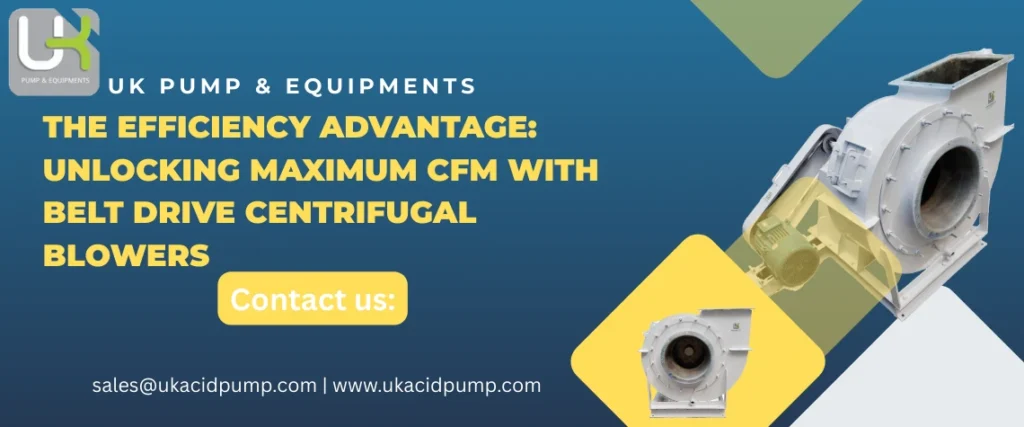
A belt drive centrifugal blower operates on a elegantly simple principle. It separates the motor from the blower wheel (impeller) using a pulley and belt system. The motor shaft turns a driver pulley. This pulley is connected via a durable V-belt or synchronous belt to a driven pulley on the blower shaft. Consequently, this arrangement allows for a crucial mechanical adjustment: the speed ratio.
1. The Power of the Pulley Ratio
The diameters of the driver and driven pulleys determine the final speed of the blower wheel. For example, a smaller motor pulley driving a larger blower pulley reduces speed. Conversely, a larger motor pulley driving a smaller blower pulley increases speed. This simple relationship is the cornerstone of flexibility. System engineers can fine-tune the CFM output without changing the motor. They achieve this by specifying different pulley sizes. This provides immense adaptability for varying process requirements.
2. Centrifugal Force in Action
The blower wheel design is equally important. As the wheel rotates at high speed, it draws air into its center. Centrifugal force then propels this air outward to the perimeter of the wheel. The air discharges into the housing volute. This creates a steady, high-pressure airflow. The combination of adjustable speed and efficient air displacement makes these systems remarkably effective.
Key Applications for Belt Drive Technology
Belt Drive Centrifugal Blowers serve a vast array of industries. Their versatility makes them indispensable. Common applications include industrial process cooling, drying systems, and dust collection. They are also vital for fume exhaust, material conveying, and combustion air supply. Wastewater treatment plants use them for aeration. Manufacturing facilities rely on them for paint booth ventilation. Furthermore, they are essential in air pollution control systems like scrubbers.
Demanding Environments
These blowers excel in tough conditions. They handle hot, humid, or particulate-laden airstreams effectively. Their isolated motor design offers protection from harsh process air. This separation enhances motor life in corrosive or dirty environments. Therefore, they are a preferred choice for metalworking, chemical processing, and woodworking.
The Definitive Efficiency Advantage
The efficiency advantage of belt drive systems is multi-faceted. It translates directly into performance gains and operational savings. This advantage stems from design flexibility, maintenance ease, and energy optimization.
1. Unlocking Maximum CFM
The primary advantage is the ability to unlock maximum CFM from a given motor. Engineers can “over-speed” or “under-speed” the blower wheel relative to the motor’s rated RPM. This allows precise matching of airflow to the system’s resistance curve. You can achieve the exact required CFM without oversizing the motor. This precision avoids energy waste common in fixed-speed systems.
2. System Flexibility and Future-Proofing
Change is constant in industrial settings. Production lines evolve and process requirements shift. Belt drive systems accommodate these changes effortlessly. A simple pulley change can adjust the CFM output. This avoids the need for a complete blower or motor replacement. This flexibility represents significant long-term cost savings. It also minimizes system downtime during upgrades.
3. Enhanced Motor Life and Protection
The belt acts as a natural shock absorber. It dampens vibrations and minor load fluctuations between the motor and blower. This protection reduces wear on both the motor and blower bearings. Additionally, the motor is located outside the main airstream. It stays cooler and cleaner in hostile environments. Cooler motors operate more efficiently and last much longer.
Comparative Analysis: Belt Drive vs. Direct Drive
A clear comparison highlights the unique benefits. Direct drive blowers have the motor shaft connected directly to the impeller. They are compact and mechanically simple. However, they lack speed adjustment without an external variable frequency drive (VFD). Their motor is also exposed to process heat and contaminants.
Belt drive blowers, in contrast, offer inherent speed adjustability. They provide superior motor protection. They also allow the use of standard, cost-effective motors. Maintenance is often quicker and less costly. While slightly less mechanically efficient due to belt losses, the overall system efficiency and flexibility are frequently superior.
The Energy Equation
Modern belt designs minimize slip and transmission losses. High-efficiency motors compound the savings. The ability to fine-tune the fan speed to the ideal operating point reduces kilowatt consumption. This leads to a lower total cost of ownership. Over years of operation, the energy savings can be substantial.
Selecting the Right Manufacturer: A Critical Partnership
Choosing among Centrifugal Blower Manufacturers requires careful consideration. Not all manufacturers possess equal expertise in belt drive design. The right partner delivers more than just a product. They provide engineered solutions and reliable support.
1. Hallmarks of a Quality Manufacturer
First, look for extensive engineering experience. Top Belt Drive Centrifugal Blower Manufacturers will offer application support. They should understand your specific industry challenges. Second, examine their testing and quality control processes. Reliable performance data is essential. Third, assess their component quality. Heavy-duty shafts, premium bearings, and robust housing construction are vital.
2. Customization and Design Support
The best manufacturers offer customization. They can tailor blower dimensions, materials of construction, and performance specs. They help select the optimal blower wheel design for your duty. For instance, backward curved wheels offer high efficiency for clean air. Forward curved wheels deliver high CFM at lower speeds. Industrial fan experts guide this critical choice.
Maximizing Performance with Proper Maintenance
Even the best-designed blower needs proper care. A proactive maintenance routine protects your investment. It also ensures sustained efficiency and CFM output. Fortunately, maintaining Belt Drive Blowers is straightforward.
1. Essential Maintenance Checks
Regularly inspect belt tension and condition. Belts should be snug but not overtightened. Check for wear, cracking, or glazing. Align pulleys precisely to prevent premature belt wear. Lubricate bearings according to the manufacturer’s schedule. Use the recommended grease type and quantity. Additionally, keep the blower wheel clean. Imbalance from material buildup causes vibration and efficiency loss.
2. Monitoring for Peak Efficiency
Implement simple monitoring procedures. Use an ammeter to track motor current. A sudden increase can indicate system blockage or mechanical issues. Listen for unusual noises like squealing or rumbling. Feel for excessive vibration. These simple steps catch problems early. They prevent costly failures and maintain designed CFM levels.
The Future of Belt Drive Technology
Belt drive technology continues to evolve. Advances in materials and design enhance its efficiency advantage. New synthetic belt compounds offer higher strength with less stretch. Advanced pulley designs improve grip and transmission efficiency. Moreover, integration with smart motor systems and IoT sensors is growing.
Integration with Digital Monitoring
Modern systems can include vibration sensors and temperature monitors. These devices provide real-time data on blower health. They enable predictive maintenance strategies. This digital integration minimizes unplanned downtime. It also ensures the blower continuously operates at its peak efficiency point. The future lies in connected, intelligent air movement systems.
Conclusion: Engineering Superior Air Systems
In conclusion, the efficiency advantage of belt drive centrifugal blowers is undeniable. Their design unlocks maximum, tunable CFM with remarkable flexibility. This technology delivers long-term reliability and cost savings. Selecting the right Belt Drive Centrifugal Blower Manufacturers is the first step. A knowledgeable partner engineers a solution tailored to your needs. They ensure you get the precise airflow your process demands. Ultimately, this leads to enhanced productivity and a stronger bottom line. Embrace the flexibility and efficiency of belt drive technology. It powers modern industry forward.